The Impact of Social Media on Minors: Comprehensive Psychological Analysis

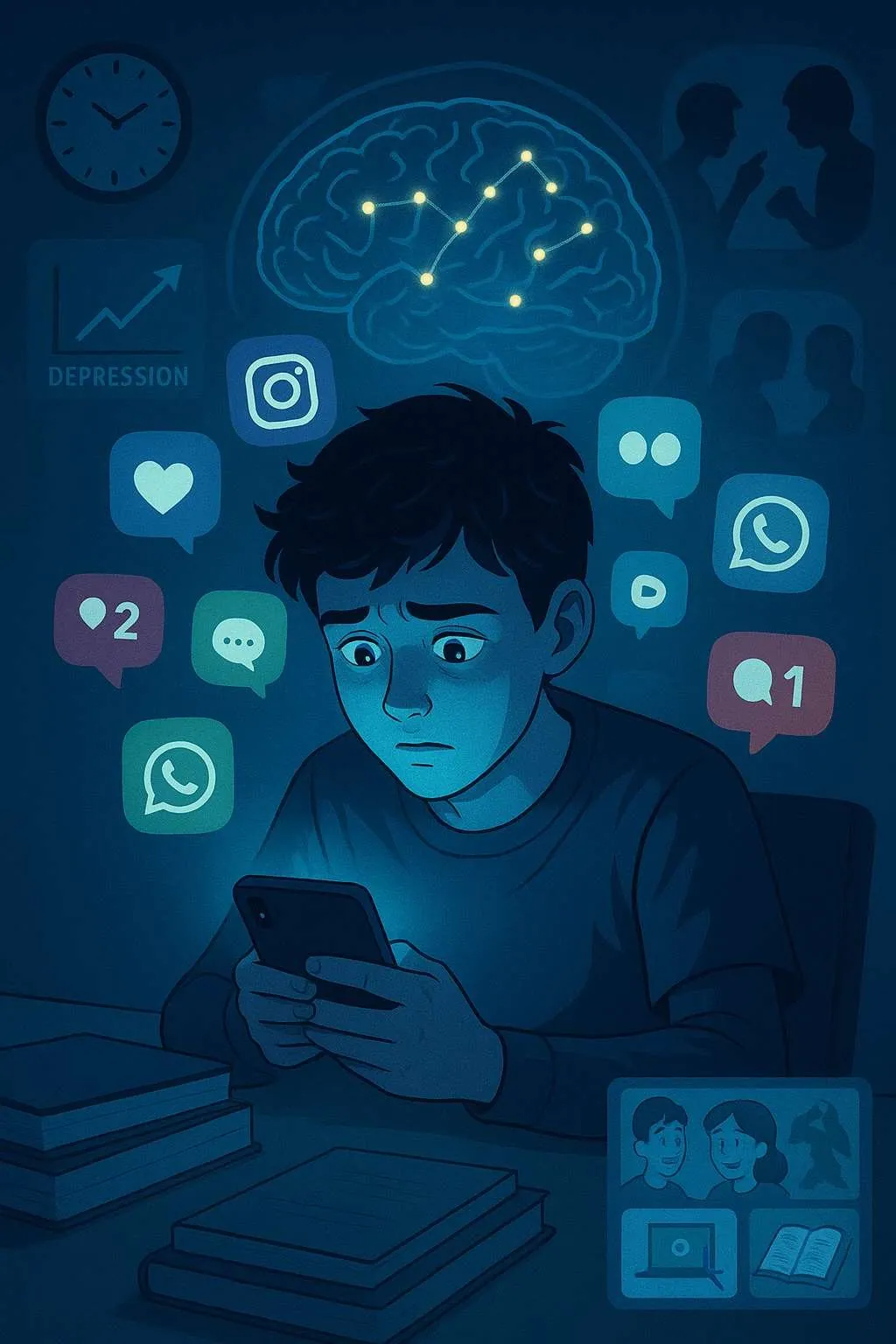
Spain leads Europe in the time minors spend on social media, with an average of 4 hours a day outside school, according to the Spanish Society of Neurology. Strikingly, almost 70% of children aged 10 to 12 already have a social media profile, even though the legal minimum age is 14, according to the SEN.
Neurobiological Impacts on the Adolescent Brain
The reward system and dopamine
The recent global trend and regulatory agreements around platforms such as TikTok also have a direct impact on minors’ mental health and brain function. Every update to algorithms, content rules or engagement levels, such as those driven by the new TikTok deal, can increase exposure to stimuli that trigger the search for digital validation.
Heavy social media use can alter the brain’s reward system, where dopamine is released with every interaction, increasing susceptibility to digital addiction and creating a feedback loop that is hard to break (more scientific information).
Changes in neurodevelopment
Constantly checking social media in early adolescence is associated with changes in the brain’s sensitivity to social rewards and punishments.
Psychological and emotional effects
The impact on minors’ mental health is profound. Young people who use social media have three times the risk of depression, according to Utah Health.
FOMO affects almost 70% of young people, generating social anxiety and a sense of isolation. Instagram and other networks can have a negative impact on adolescents’ body image and emotional wellbeing.
Social and safety risks
Cyberbullying is a serious, recurring and potentially harmful problem. INCIBE offers information and resources for families. Many victims may go on to experience suicidal ideation, as UNICEF warns.
Grooming, in which adults use social networks to sexually exploit minors, calls for particular vigilance and prevention.
Impact on academic and cognitive performance
Excessive social media use harms concentration, memory and learning, and can disrupt sleep and school performance. In addition, constant “scrolling” and overstimulation make sustained attention harder.
Sleep disruption and circadian rhythms
83% of young people use devices before going to sleep, which affects their sleep and metabolic health. The effects of blue light and poor night-time technology habits have proven consequences.
Positive aspects and recommendations
Used responsibly and with guidance, social media can strengthen creativity, digital skills and educational collaboration, as the ONTSI report notes.
For younger children, it is recommended to follow the AEPNYA guidelines, set up technology schedules and create screen-free spaces, with expert advice for parents.
Conclusions and future outlook
Social media use among minors calls for educational and preventive strategies that actively involve families and teachers, in order to minimise risks and support healthy, well-rounded development.